

Plenty of people can read the bottom line of an eye chart and still feel worn out after a few pages of a book. Sharp eyesight is only one part of vision. Your eyes also need to move and focus together, and your brain directs all of that teamwork many times every minute.
Vision therapy trains those skills, and your first visit is where the program starts to take shape. At your first session, you’ll meet one-on-one with a vision therapist who uses your exam results to guide you through a few relaxed activities and explain how your program will work. Some families come to us after noticing reading troubles at school, while many adults come in after a concussion or brain injury.
What Vision Therapy Treats
Vision therapy is an individualized treatment plan that an optometrist prescribes to develop or rehabilitate specific visual skills. Glasses and contacts can sharpen a blurry image. Therapy works on skills like following a line of text or holding your focus through a long meeting.
We see children, teens, and adults. Before choosing where to begin, we review your health history and talk through the symptoms that brought you in.
Common Issues It Addresses
Many people arrive after months of wondering why simple tasks feel so hard. A program may address:
- Eye tracking problems, which can make you skip words or lose your place
- Focusing problems that make it hard to switch between near and far objects
- Eye teaming problems, which can lead to double vision
- Poor depth perception
- Vision changes after a head injury
Concussions deserve a special mention here. A concussion can affect how your eyes move together, and these problems may slow your recovery if nobody treats them.
Why a Functional Vision Exam Comes First
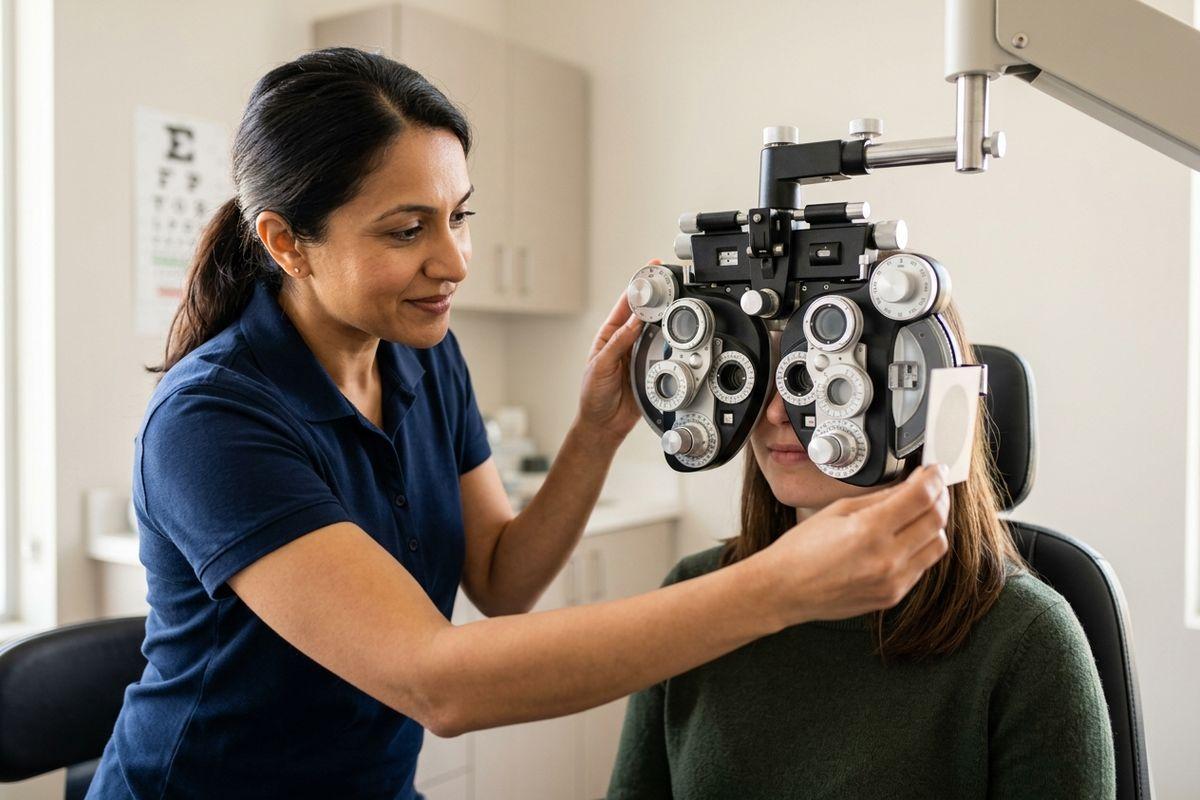
Every program starts with a functional vision exam. A routine eye exam looks at your eye health and how clearly you see. The functional exam spends more time on how your eyes move and how well they work as a pair.
Your optometrist uses these results to figure out what’s behind your symptoms. From there, we can build a plan around your specific needs.
Signs You Could Benefit
Before your exam, jot down anything you’ve noticed at home, school, or work. Symptoms that can point to a problem with visual skills include:
- Headaches after reading or screen time
- Eyes that feel tired or sore by the end of the day
- Trouble concentrating through a workday
- Skipping lines or losing your place while reading
If you’re booking for your child, ask their teacher what they’ve seen in class. Kids often don’t realize their vision works differently from anyone else’s, so they rarely mention it.
What Happens During Your First Session
Your first session is short and one-on-one with a vision therapist. There’s no pressure to perform, and you can ask questions along the way.
Your therapist may use lenses, prisms, filters, and balance boards to help your eyes practise new patterns. Some activities happen on a screen and others are hands-on. Your therapist will explain how each one connects to your exam results.
Exercises You Might Try
Early activities tend to be simple, and they build on each other over time. You might try:
- Tracking drills where you follow a moving target
- Focusing exercises that use near and far targets
- Hand-eye coordination tasks
You’ll also go home with activities to practise between visits. A few minutes a day can help reinforce what you work on in the office. Wear comfortable clothes, since some tasks involve standing or balancing. And bring your current glasses or contacts if you have them.
How Your Program Moves Forward
Most people come in for weekly sessions that last 30 to 60 minutes. The time between visits gives your visual system a chance to adapt. Depending on your needs, a program can last anywhere from several weeks to a few years.
As your skills improve, the activities get harder. Something that felt tricky in week 2 may feel routine by week 6. We adjust your plan as you go, so each session stays at a challenge level you can manage.
Your optometrist checks in regularly to review how things are going. Progress looks different for everyone, but you may notice changes like:
- Fewer headaches
- Less eye strain
- Reading for longer before you need a break
- Better focus at school or work
Track these changes at home. Your notes give your therapist useful information for planning the next few weeks.
Book Your First Vision Therapy Visit
Vision plays a part in nearly everything you do, including how you perform in sports. If concussion symptoms are still slowing you down, or your child struggles with homework, a functional vision exam can help you find out what’s going on.
The optometrists and vision therapists at Ottawa Vision Therapy can walk you through each step, from your first exam to your final session. Book an appointment and start building visual skills with a team that’s glad to support you.