
You feel fine sitting still, but the moment you’re in a moving car, scrolling through your phone, or walking through a busy grocery store, that familiar wave of nausea hits. You’ve tried everything, yet nothing seems to help. What if the problem isn’t your stomach or your ears, but your eyes?
Ottawa Vision Therapy works with people who are experiencing exactly this, and the connection between vision and motion sickness is more common than most people realize. A closer look at your visual skills can often reveal what standard testing can miss.
Yes, your vision can absolutely contribute to motion sickness, and in many cases, it’s the piece of the puzzle that gets missed the longest.
The Link Between Your Eyes and Motion Sickness
How Your Visual System Processes Movement
Your eyes, inner ear, and brain are constantly sharing information to tell your body where it is in space. When those signals don’t match up, your brain gets confused, and that confusion can show up as nausea, dizziness, or disorientation. Think of it like watching a shaky video on a big screen while sitting perfectly still. Your eyes say you’re moving, but your body says you’re not.
When your eyes don’t work together as a team, this mismatch gets worse. Poor eye teaming means your visual system is already working harder than it should just to process everyday movement around you.
Vision Problems That Relate to Motion Sickness
Weak binocular vision, where both eyes struggle to function as a coordinated pair, can make it hard to judge depth and track movement accurately. Eye-tracking difficulties add another layer of visual confusion, especially in environments where things move quickly or unpredictably. Focusing problems can make it even harder for your brain to keep up with a constantly changing visual scene.
Vision therapy works through neuroplasticity to help retrain these skills in a structured, personalized way.
Concussion, Brain Injury, and Motion Sensitivity
Why Symptoms Linger After a Concussion
A concussion can disrupt how your visual system functions, even when standard medical tests come back clear. Motion sensitivity is one of the most common complaints people have months after a head injury, and it can seriously affect your ability to work, drive, or spend time in busy environments. The frustrating part is that visual dysfunction from a concussion often doesn’t show up on routine testing.
That means many people spend months searching for answers, not realizing that their visual system may be at the root of what they’re experiencing. Our team at Ottawa Vision Therapy offers specialized concussion and traumatic brain injury examinations designed to identify these often-overlooked visual issues.
Signs Your Vision May Be the Root Cause
If any of these sound familiar, your visual system may be worth a closer look:
- Nausea in busy or visually stimulating environments
- Dizziness when reading or using screens
- Difficulty concentrating when there’s a lot of visual activity around you
- Feeling worse in places with lots of movement, like shopping centres or crowded hallways
How Vision Affects Kids at School

Visual Stress in the Classroom
For kids, the classroom is full of visual demands. Reading, screens, whiteboards, and shifting between near and far tasks all require a well-functioning visual system. When that system isn’t working properly, a child can experience symptoms that look a lot like motion sickness, including headaches, fatigue, and nausea, just from sitting at their desk.
Many children avoid reading or screen tasks without being able to explain why. They just know it feels uncomfortable, and over time, that avoidance can show up as falling behind in school. Vision therapy can help improve reading skills by addressing the underlying visual coordination and processing issues that make these tasks so difficult.
When to Take a Closer Look
Vision-related struggles are often mistaken for attention or behaviour problems. If your child is having a hard time at school and there’s no clear explanation, their visual skills may be worth assessing. Watch for these signs:
- Complaints of dizziness or nausea during class or reading time
- Headaches after short periods of visual work
- Poor school performance despite effort and support
- Avoiding tasks that require sustained visual focus
What a Binocular Vision Assessment Can Reveal
A standard eye chart checks whether you can see clearly at a distance, but it doesn’t tell the full story of how your visual system functions.
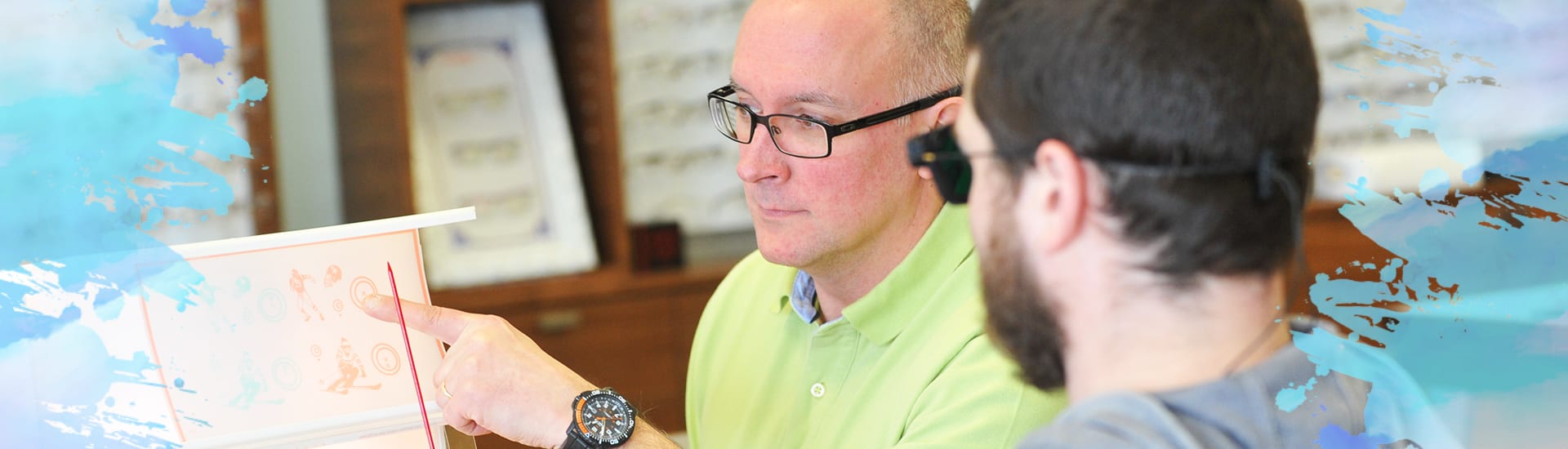
A binocular vision assessment goes much further. It evaluates how well your eyes team together, how accurately they track, and how efficiently they shift focus. Comprehensive eye exams are recommended regularly for both adults and children, and a binocular vision assessment builds on that foundation with a deeper look at visual skills.
This kind of assessment can identify visual skill gaps that connect directly to motion sensitivity, dizziness, or learning difficulties. For many people, it’s the first time anyone has looked at their vision this closely. Ottawa Vision Therapy offers comprehensive binocular vision assessments, along with specialized evaluations for concussion and traumatic brain injury, learning disabilities, and children with special needs.
Vision Therapy as a Path Forward
What Vision Therapy Targets
Vision therapy, sometimes called vision training or orthoptics, is a structured program designed to train your brain and eyes to work together more effectively. It addresses the underlying visual skill gaps rather than just managing symptoms on the surface. Each program is customized to the individual based on their assessment.
Who Can Benefit
Vision therapy can be a helpful path forward for a wide range of people, including:
- Adults dealing with motion sensitivity or dizziness after a concussion
- Children whose school performance is being affected by visual difficulties
- Anyone experiencing unexplained dizziness or visual discomfort
Find Comfort Again
If you’ve been looking for answers and haven’t found them yet, your visual system may be the missing piece. Our team at Ottawa Vision Therapy, serving the Ottawa and Merivale area, is ready to assess your visual skills and work with you on a plan that fits your needs. Book an appointment today and take that first step toward clearer, more comfortable vision.