


Eye exercises are everywhere online, and most of them promise relief in a few minutes a day. Adults with lingering concussion symptoms ask about them often. So do parents watching their kids struggle through homework.
Home exercises have a place, and they tend to do the most good alongside in-office sessions. You can practice parts of vision therapy at home, though lasting progress usually depends on a plan built around a full assessment of how your eyes and brain work together.
What Vision Therapy Really Means
Vision therapy trains the connection between your eyes and your brain. A therapist measures how your visual system performs under real demand, then prescribes activities to build the skills that are falling short.
That’s a long way from a stretch you do at your desk. The program changes as you improve, and someone watches how you perform each activity so small compensations don’t turn into habits.
Visual Skills It Supports
Most of the work happens in skills you never think about until they stop cooperating:
- Eye teaming, so both eyes point at the same spot at the same time
- Tracking, so your eyes move smoothly across a line of text
- Focusing, so you can move from a book to the whiteboard without waiting out the blur
- Depth perception, so you judge distance well when you park the car or pour a coffee
- Visual processing, so your brain makes sense of what your eyes send it
Eye Exercises You Can Try at Home
Plenty of activities are safe to do on your own, and they ask your eyes to work in ways a screen never does. Give a few of these a try:
- Move your attention between something close and something across the room, holding each for a few seconds.
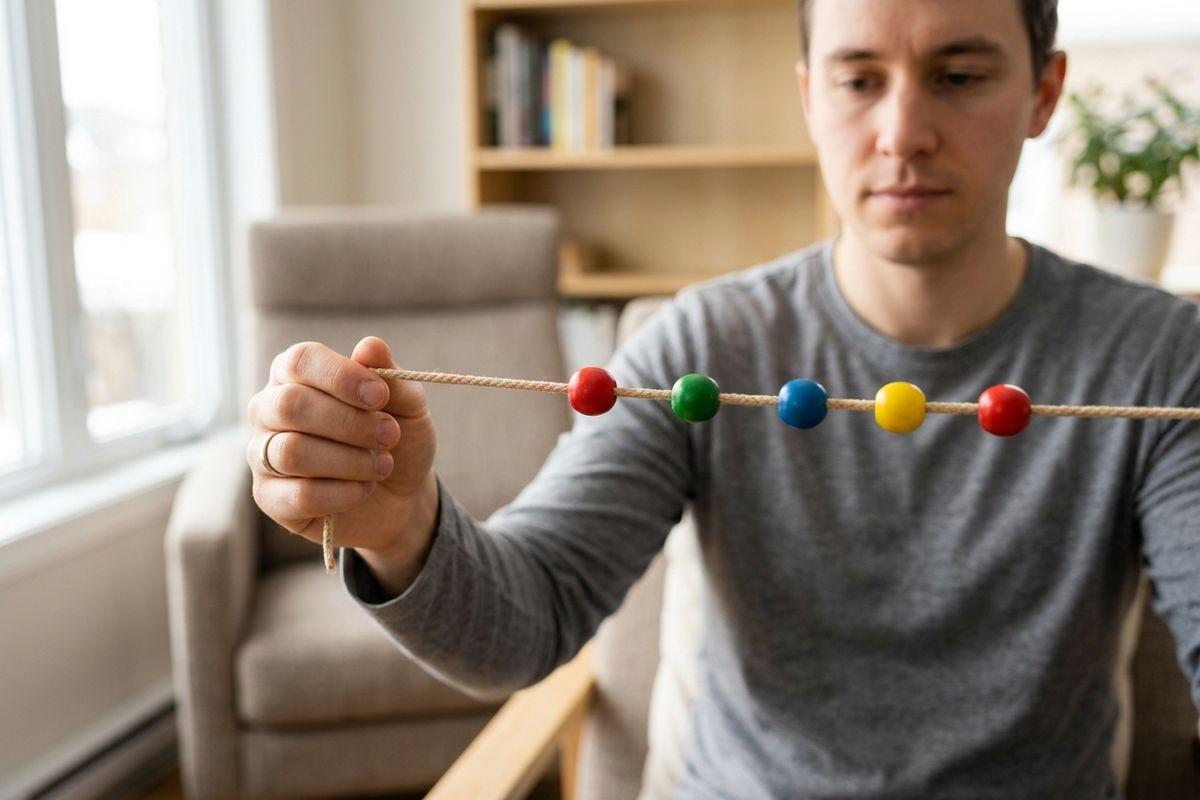
- Thread beads onto a long string, hold one end to your nose, and practice eye teaming on one bead at a time.
- Hold a pencil at arm’s length and bring it slowly toward your nose, stopping the moment it doubles.
- Trace a slow figure eight in the air using only your eyes, then reverse direction.
After several hours in front of a monitor, your eyes may want rest more than exercise. The 20-20-20 habit builds that in: every 20 minutes, look at something 20 feet away for 20 seconds. Blink fully while you do it, since we blink far less than usual when we’re concentrating on a screen.
What Home Vision Therapy Can and Can’t Do
Your eyes may feel looser after a few minutes of focus changes, and the rest of the afternoon can feel more comfortable.
The limit shows up in what these exercises leave unanswered. They don’t tell you why your eyes struggled in the first place, so you end up treating the ache instead of the cause. Repetition without feedback creates its own problem. If you’re leaning on one eye or tensing your way through a target, you’ll practice that compensation right alongside the skill you meant to build.
Signs You Need More Than Home Practice
Certain symptoms suggest something more than tired eyes. Watch for a few of these:
- Headaches that build through the day
- Double or blurry vision during close work
- Dizziness in busy places like grocery aisles
- Losing your place while reading, or rereading the same line
- A child who avoids homework or is falling behind in class
Why Guided Vision Therapy Works
A prescribed program starts with measurement. Everything begins with a comprehensive binocular vision assessment that checks how your eyes point, focus, and move as a pair, plus how much effort they take to hold a single clear image.
Those numbers shape the plan. Sessions usually run weekly, and we adjust each one based on how the previous week went.
Tools the Team Uses
The tools an optometrist uses go well beyond a string and a pencil:
- Lenses and prisms that change where an image lands
- Filters that separate what each eye sees
- Balance boards and metronomes that pair vision with movement
- Virtual reality and 3-D activities that turn practice into a game
Home practice still matters in a guided program. Treat it as homework between appointments, since that repetition is what helps a new skill hold up through a long workday or a full afternoon of reading.
How Vision Therapy Can Help You
Home exercises can take pressure off a screen-heavy day and keep you engaged between appointments. Pair them with an assessment to learn what you’re training for.
Adults dealing with concussion symptoms that won’t fade may find support for the headaches, dizziness, and focus troubles that come with them. For kids, the right plan can ease the visual demands that make schoolwork harder than it needs to be.
Turn Home Practice Into a Vision Therapy Plan
Your program begins with a comprehensive binocular vision assessment. From there, you’ll usually attend weekly sessions paired with home practice, plus regular checks to track your progress along the way.
Ottawa Vision Therapy builds each program around what testing shows, whether you’re recovering from a concussion or helping your child through the school year. Book an appointment and start with a clear picture of how your visual system works.