

Key Takeaways
- Dyslexia is a language-based reading difficulty, not a problem with how your eyes see letters.
- Vision therapy trains how your eyes work together, focus, and track along a line of text.
- Some vision problems resemble dyslexia, so a full eye exam helps sort one from the other.
- Structured reading instruction supports true dyslexia, while vision therapy supports vision issues.
- Our team at Ottawa Vision Therapy can check tracking, focusing, and eye teaming during an assessment.
Vision Therapy Isn’t Designed for Dyslexia
If your child struggles with reading, you may wonder whether their trouble comes from their eyes, their brain, or another factor. At Ottawa Vision Therapy, we help families sort through these questions with careful testing and clear answers. Reading depends on both language skills and visual skills, so knowing which one needs support is important for resolving your child’s challenges.
Vision therapy does not treat dyslexia itself, but it can help when another vision problem is also contributing to reading struggles. A full eye exam is the right way to identify the source of the problem and find a solution that supports your child.
What Dyslexia Really Is
Your child sits down with a book and the words seem to fight back. That struggle is often caused by dyslexia, a language-based reading difficulty that affects how the brain sounds out letters and connects them to words. This is a separate situation from how the eyes interpret shapes on a page.
A dyslexia diagnosis usually comes after other causes get ruled out.
Common Signs You May Notice
Reading trouble tends to show up in small daily moments, like homework that drags on for hours. It might include:
- Trouble with reading, spelling, and writing.
- Slow, effortful decoding of single words.
- A struggle to keep up with classmates in school.
What Vision Therapy Does & Doesn’t Do
Vision therapy is a form of eye training. It’s designed to improve how your eyes move, focus, and coordinate, so that reading and close work feel more comfortable. Think of it like physical training, but for the visual system.
However, vision therapy doesn’t resolve language-based dyslexia. Dyslexia is caused by how the brain processes sounds and letters, not by the visual system itself.
That said, vision therapy may still be helpful if your child has both dyslexia and other visual struggles.
Skills Vision Therapy Targets
A vision therapy training plan focuses on measurable skills. These include:
- Binocular vision and eye teaming.
- Focusing ability and eye movement.
- Visual processing and visual performance.
Where Vision & Reading Problems Overlap
Reading involves multiple different skills. When your eyes don’t team up well, letters can blur or drift, and it can be a struggle to read text. This often resembles a reading disorder.
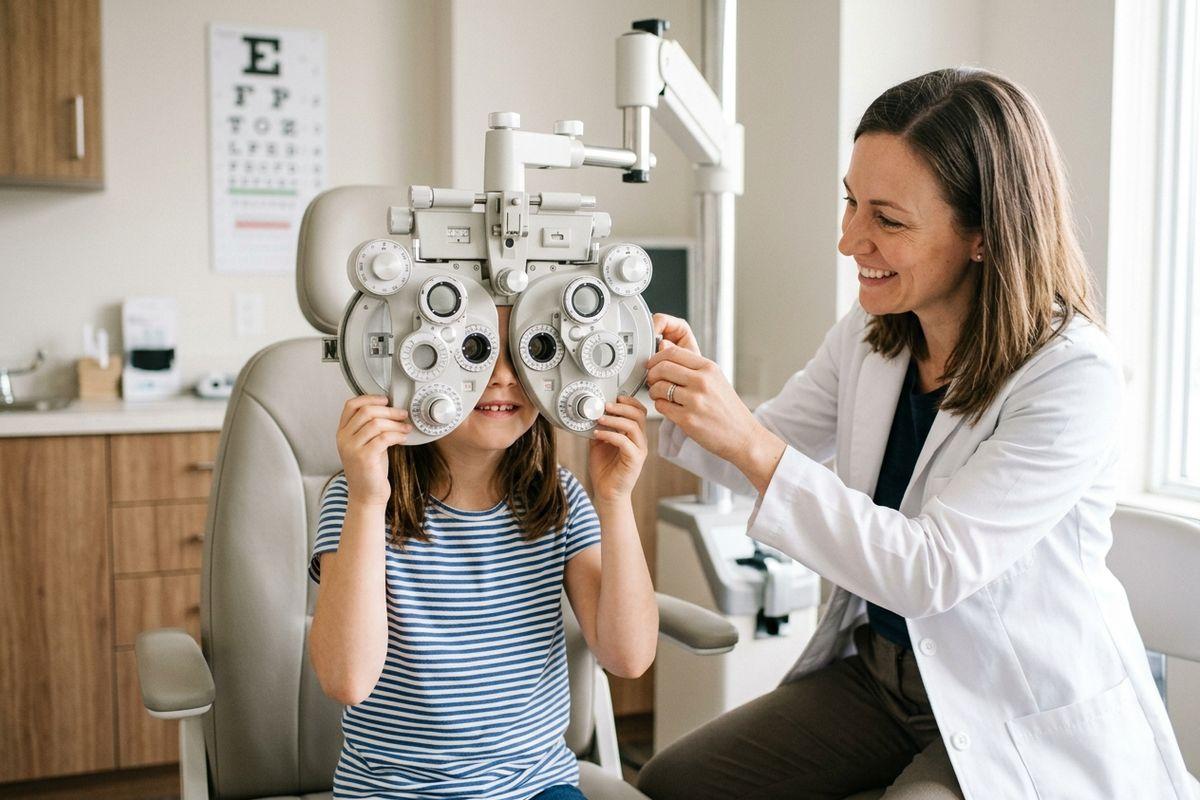
Dyslexia and other vision problems can often be distinguished as part of a complete eye exam. During this appointment, an optometrist will assess tracking, focusing, and eye teaming skills in order to rule out vision problems. If all of these skills are working as intended, we can move on to checking for dyslexia.
How Our Team in Ottawa Can Help
As a Merivale optometrist practice, our team offers care for both children and adults across Ottawa. We’ll work with you to identify the root of your vision problems, and then we’ll design a program for treatment.
The support we offer includes comprehensive binocular vision assessments, pediatric and learning-related evaluations, as well as personalized in-office vision therapy plans.
The right approach depends on what’s going on. Structured reading instruction supports dyslexia, while vision therapy supports vision issues that make reading harder than it should be.
Visit Your Optometrist
Vision shapes a large share of how children learn, work, and play. If reading has become a daily battle for your child, our team at Ottawa Vision Therapy can assess their visual skills and map out a plan that fits. Book an appointment today and take the first step toward clearer, more comfortable vision.