
You may have heard people use the terms “strabismus” and “lazy eye” interchangeably. However, while they are related, they’re actually two different vision conditions. It’s important to know the difference, especially if you or your child have trouble with reading or concentration, or if you deal with headaches after a long day.
Strabismus is an eye alignment problem where the eyes point in different directions, while amblyopia (lazy eye) is a vision development problem where the brain favours one eye over the other. This guide breaks down each condition in simple terms, shows you how they’re related, and explains how your eyes and brain can learn to work together again.
What Is Strabismus (An Eye Turn)?
Also known as crossed eyes, strabismus is a condition where a person’s eyes don’t look at the same place at the same time. It happens when the muscles that control eye movement don’t work together properly. One eye might look straight ahead, while the other turns inward, outward, upward, or downward.
Common Signs & Symptoms of Strabismus
- Eyes that appear crossed or look in different directions
- Squinting or closing one eye in bright sunlight
- Tilting the head to see an object
- Trouble with depth perception—like misjudging steps
- Double vision
Different Types of Strabismus
The most common types of strabismus include esotropia, where one eye turns inward, and exotropia, where one eye turns outward. It’s also possible for an eye to turn up or down (called hypertropia and hypotropia respectively).
What Is Amblyopia (Lazy Eye)?
Amblyopia, or lazy eye, is a problem with vision development. It’s not about a “lazy” eye but a “lazy” connection between one eye and the brain. The brain starts to favour the stronger eye and relies less on the weaker one, which can cause vision in the weaker eye to worsen.
Common Signs & Symptoms of Lazy Eye
- Poor depth perception
- Frequently bumping into things on one side
- Shutting one eye to see better
- An inward or outward eye wander
- Head tilting
How Strabismus & A Lazy Eye Connect
Strabismus is a frequent cause of amblyopia. To avoid double vision, a child’s brain may ignore the image from the turned eye. This lack of use can lead to poor vision development and result in a lazy eye.
Key Differences at a Glance
So, what’s the main takeaway? Strabismus is an alignment problem with the eyes, while amblyopia is a vision problem where the brain ignores input from one eye. Strabismus can cause amblyopia, but you can also have one without the other.
A Problem of Alignment vs. A Problem of Sight
Think of it this way—strabismus is about where the eyes are pointed. Amblyopia is about how clearly each eye can see and how well the brain uses that information. A person can have perfectly aligned eyes but still have a lazy eye if the brain isn’t using both eyes together.
How a Professional Tells Them Apart
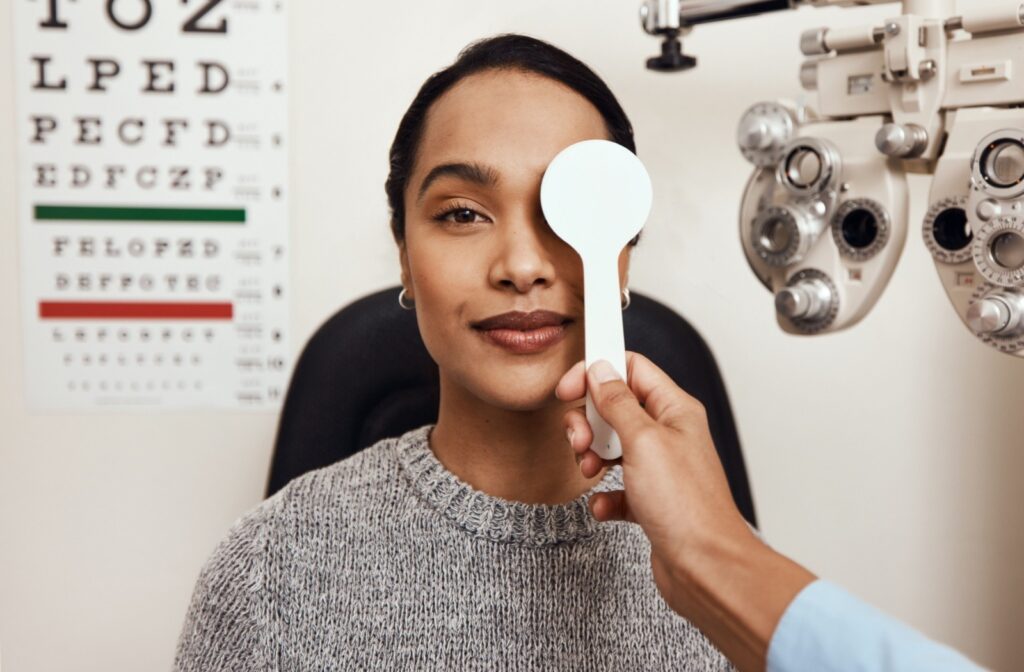
During a vision therapy eye exam, your provider will evaluate your eye alignment to identify strabismus and measure the vision in each of your eyes separately in order to spot amblyopia.
How These Vision Issues Affect Daily Life
Untreated vision problems can make everyday tasks a struggle for both kids and adults. In many cases, strabismus and amblyopia can be mistaken for learning difficulties in children or lingering concussion symptoms in adults. Your vision is a huge part of how you experience the world, and these challenges can have a real impact.
Challenges for Kids at School
There are several signs that your child could benefit from vision therapy. They might lose their place while reading, have messy handwriting, or avoid sports. They might also seem to have a short attention span or behavioural issues in the classroom.
Challenges for Adults at Work & After Injury
For adults, especially patients recovering from a brain injury or with lingering concussion symptoms, poor eye teaming can cause problems. You might get headaches from screen time, feel dizzy in busy places like grocery stores, or struggle with balance. These symptoms can make it hard to stay productive at work and enjoy daily life.
How Vision Therapy Can Help
The goal of vision therapy is to teach your eyes and brain to work together as a team. It’s a personalized program of exercises—like physical therapy for your visual system. It can help improve visual skills that glasses or contact lenses alone can’t fix.
A Personalized Plan for Your Eyes
There is no one-size-fits-all approach to vision therapy. At Ottawa Vision Therapy, our vision therapy program is designed for you based on a thorough assessment of your visual system. Depending on your situation, we may recommend visual activities, therapeutic lenses, or prisms to help you reach your goals.
Rebuild Eye-Brain Communication
Vision therapy helps create and strengthen the neural pathways between your eyes and your brain, thereby helping you learn to coordinate your eye movements and improve focusing. This can help you develop better depth perception and visual comfort.
At Ottawa Vision Therapy, our team of optometrists and vision therapists is ready to help you put value behind your vision. A comprehensive binocular vision assessment can help identify issues like amblyopia and strabismus, book an appointment with us today.