

So much of how we experience the world comes through our eyes. When our visual system is disrupted by an event like a concussion, or if it simply never fully develops, this can affect our ability to learn, focus, and simply get through the day.
If you or your child are struggling with visual challenges, you may be wondering if there’s a solution. For many people, vision therapy can be a worthwhile investment in their daily function, comfort, and overall quality of life.
Signs You Might Need Help with Your Vision
You may notice changes in your vision or daily life after a concussion. Or, perhaps, you’ve noticed your child struggling with schoolwork. These signs both point to possible issues with how the eyes and brain work together.
Signs of Lingering Concussion Symptoms
- Headaches or eye pain
- Sensitivity to light
- Blurred or double vision
- Dizziness or nausea, especially when scrolling on a screen
- Trouble with balance & coordination
- Feeling overwhelmed in busy places like grocery stores
Signs of Children with School Performance Issues
- Losing their place while reading
- Rubbing their eyes when reading or doing close-up work
- Having trouble with concentration during visual tasks
- Avoidance of reading or close-up work
- Complaining of tired eyes
What Does Vision Therapy Fix?
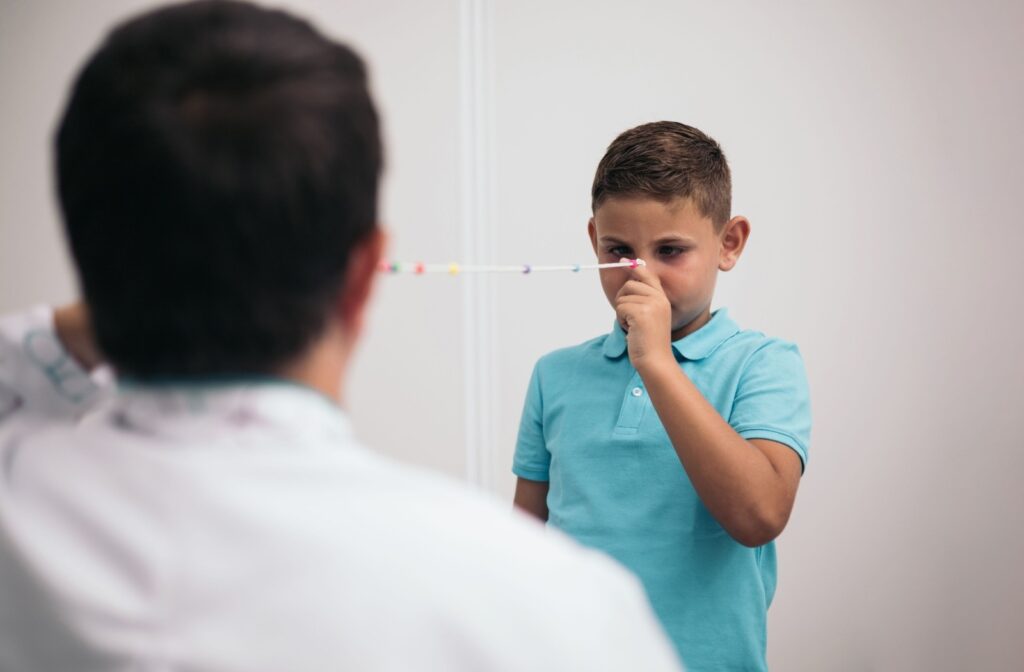
Vision therapy is a personalized program of exercises designed to improve the connection between your eyes & your brain. It’s not about strengthening eye muscles—it’s about retraining how your brain uses the information it gets from your eyes. This helps the entire visual system work more efficiently.
Rebuild Eye Teaming & Coordination
Vision therapy can help both of your eyes work together smoothly as a team. Here are some of the benefits that it can offer.
Improve Eye Focus & Tracking
Exercises can help you shift your focus between near and far objects with greater ease. They can also help you follow moving objects without symptoms like dizziness. These skills are important for reading and sports.
Help with Balance & Motion Sensitivity
By improving how your brain processes visual information, vision therapy can help restore your sense of where you are in space. This can reduce feelings of dizziness or imbalance. You might feel more stable and confident as you move through your day.
Your Path to Better Vision: What to Expect
A vision therapy program is more than just eye exercises. It starts with a detailed assessment to understand your challenges. From there, we create a plan that fits your vision needs and goals.
The First Step: A Comprehensive Eye Exam
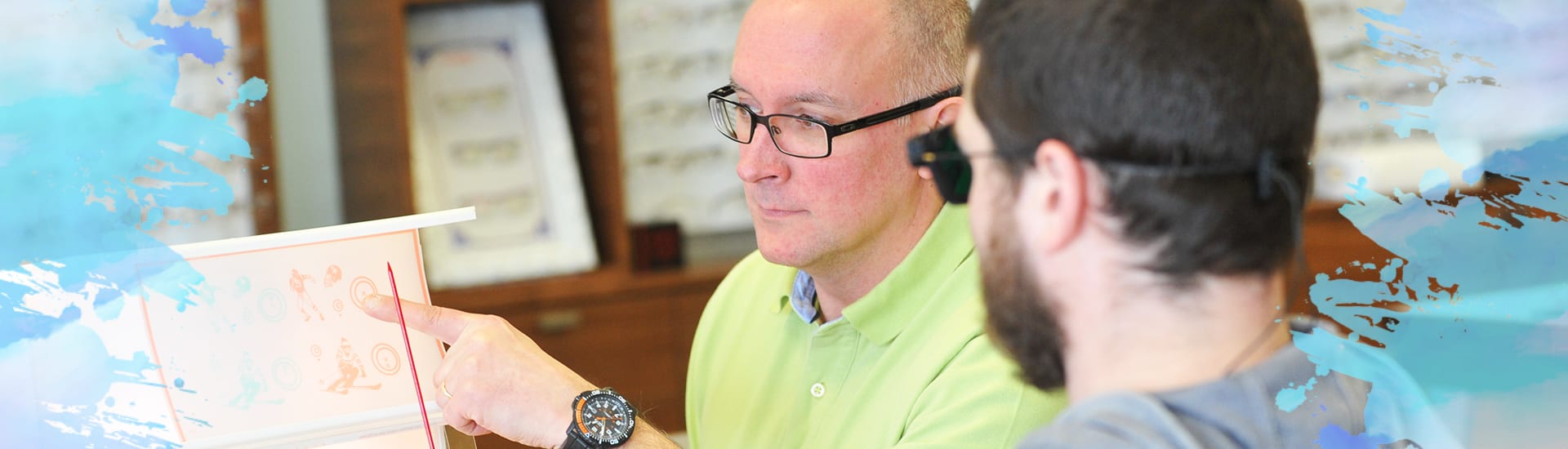
During a visual skills assessment (also known as a functional vision assessment), we evaluate abilities such as eye tracking, focusing, and how your eyes work together. This allows us to identify the underlying causes of visual difficulties beyond what a routine eye exam can detect.
Your Personalized Therapy Program
Based on your eye exam, we’ll develop a plan to treat your vision issues. Your program may involve therapeutic lenses, prisms, or even computer tools. The goal is always to help improve your visual abilities.
In-Office Sessions & At-Home Exercises
You’ll typically have weekly sessions with a vision therapist. You will also do guided exercises at home to support your progress. This combination helps you build and reinforce new visual skills.
Real-Life Benefits & Patient Outcomes
The main goal of vision therapy is to improve your daily function and quality of life. People who complete a program often report significant changes in their work, school, and personal lives.
Vision therapy is a scientifically supported, personalized treatment aimed at making visual tasks comfortable and automatic.
For Adults After a Concussion
Many adults find that vision therapy helps them return to work or daily activities with fewer headaches and less eye strain. Many people also feel more confidence in their balance and coordination. This can help them get back to the activities they enjoy.
For Children in the Classroom
Kids often show improvement in reading speed, comprehension, and attention. Homework can become less of a struggle. This can make school less frustrating and more enjoyable.
What Kind of Improvement Is Possible?
Every person is different, but vision therapy often allows people to find relief from disruptive symptoms. The goal is building visual skills that last.
Common Questions About Vision Therapy in Canada
It’s normal to have questions about the process, timeline, and cost of a program like vision therapy. Here are answers to a few common queries we hear.
How Long Does Vision Therapy Take?
A program’s length depends on your individual needs and goals. Your optometrist will give you an estimated timeline after your initial assessment. Consistency with your sessions and home activities plays a part in your progress.
What Is the Cost of Vision Therapy?
The cost of vision therapy varies based on the personalized program you need. Many families ask if vision therapy is covered by OHIP, and while it generally is not, some private health insurance plans may offer coverage for services. We can discuss payment plans and options with you during your consultation.
What Is a Good Age to Start?
Vision therapy can be effective for both children and adults. While it can be done at any age, therapy may be more challenging for children under 6 or 7 due to attention and developmental factors. That said, addressing visual issues as soon as they become apparent is always recommended.
Find Your Ottawa Vision Therapy Solution
If lingering concussion symptoms or school struggles are affecting you or your child, it may be time to explore your options. An assessment is the first step toward understanding the issue and finding relief.
At Vision Therapy Ottawa, we’re here to help you find better visual comfort and performance. So book an appointment today and let us help you develop the vision skills that you need for your life.