
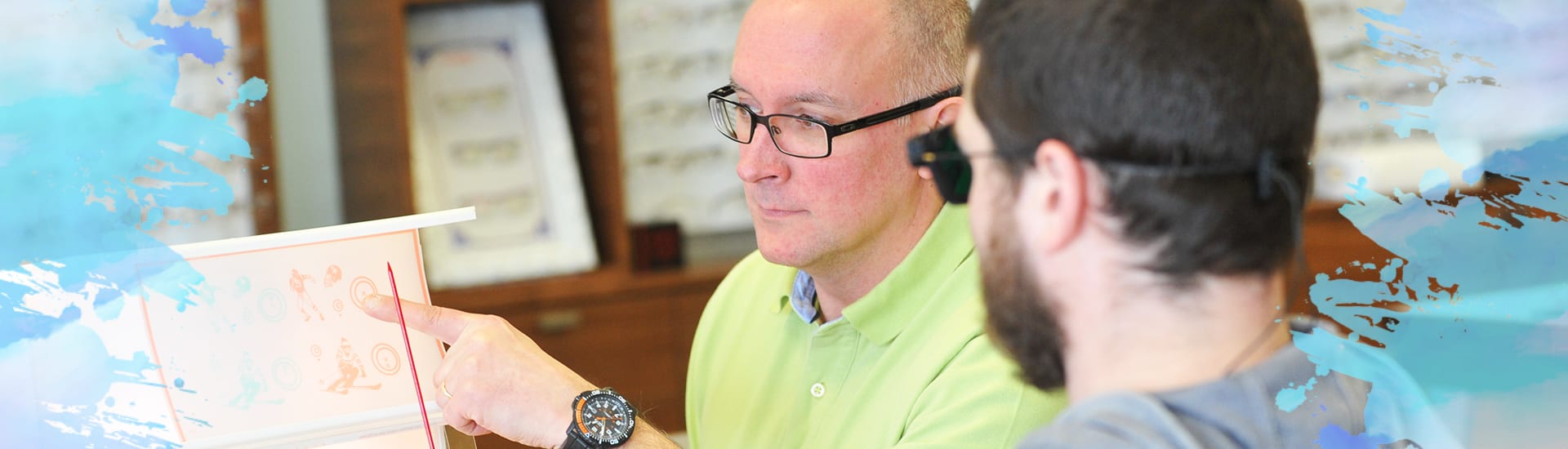

Post-concussion blur and reading difficulties aren’t just frustrating—they’re life-altering. At Ottawa Vision Therapy, we use personalized exercises to develop visual skills that corrective lenses can’t reach.
Vision therapy typically takes 12 to 24 weeks, with most people attending sessions once or twice per week, though your specific timeline depends on your age, condition severity, and how consistently you practice your exercises. Vision therapy uses personalized exercises to improve your visual skills beyond what glasses alone can provide.
What Is Vision Therapy?
Think of vision therapy as physical therapy for the eyes and the brain. While glasses help you see clearly, vision therapy trains your eyes to work together effectively and your brain to process visual information more accurately.
Through a series of customized, doctor-supervised exercises, patients develop essential skills—such as tracking, focusing, and depth perception—that lenses alone cannot address. It’s not just about “strengthening” eye muscles; it’s about retraining the neural pathways to make seeing, reading, and learning feel effortless again.
Timeline for Vision Therapy Results
Your treatment length depends on several personal factors that make each program unique. Children often see faster progress than adults because their visual systems adapt more quickly to new skills.
Most programs follow a predictable pattern—you’ll likely notice small improvements within the first month, with more significant changes appearing around week 8 to 12. The optometrist tracks your progress through regular assessments and adjusts your program as your visual skills strengthen.
Factors That Affect Your Treatment Length
- Age—children often respond faster than adults
- Severity of your visual condition
- Type of vision problem you’re addressing
- Your commitment to home exercises
- How consistently you attend sessions
Typical Timelines by Condition
- Convergence insufficiency: 12-16 weeks
- Amblyopia (lazy eye): 16-24 weeks
- Strabismus (eye turn): 20-32 weeks
- Concussion-related vision issues: 12-20 weeks
- Learning-related visual problems: 16-28 weeks
Learn more about the differences between these conditions and their specific treatment approaches.
What Happens During Your Vision Therapy Sessions
Each appointment lasts about 45 to 60 minutes and focuses on exercises tailored to your visual challenges. The vision therapist guides you through activities that strengthen eye coordination, improve focusing ability, and enhance how your brain processes visual information.
Your sessions build on each other—what feels difficult in week 2 becomes easier by week 6 as your visual system develops new skills. The therapist adjusts your exercises as you progress, keeping you challenged but not overwhelmed.
Weekly Session Structure
- Progress assessment & symptom review
- Targeted exercises for your specific condition
- New techniques as your skills improve
- Home therapy program updates
Learning about what to expect during your initial evaluation can help you prepare for your treatment journey.
Signs Your Vision Therapy Is Working

You might notice changes in your daily life before formal testing shows improvement. Your headaches after reading might become less frequent, or your child might spend more time on homework without complaining about tired eyes.
These early signs typically appear within 6 to 8 weeks of consistent therapy. You’ll find that tasks requiring visual concentration become easier and more comfortable as your sessions continue.
Early Improvement Indicators
- Less eye strain during reading or computer work
- Reduced headaches after visual tasks
- Better concentration for longer periods
- Improved reading speed & comprehension
- Enhanced depth perception & coordination
If your child struggles with reading despite having good eyesight, vision therapy can address visual processing issues that affect academic performance.
Factors That Speed Up Your Recovery
Your commitment to the full program is the biggest factor in how quickly you see results. Patients who attend all their sessions and consistently practice their home exercises typically reach their goals faster than those who miss appointments or neglect daily practice.
Think of vision therapy like learning to play piano—regular practice builds skills faster than sporadic efforts. Your visual system needs consistent training to develop new patterns and strengthen weak areas.
Home Practice Requirements
- Daily exercises typically take 15-20 minutes
- A consistent practice schedule produces better results
- Following the therapist’s instructions exactly as given
- Regular communication about any difficulties
Research from Vision Therapy Canada supports the importance of consistent practice for achieving long-term improvements in visual skills.
Success Rates & Maintenance
The visual skills you develop through therapy typically last long-term without ongoing treatment. Your brain learns new ways to process visual information, and these improvements become automatic parts of how you see and interact with your environment.
Some patients benefit from occasional follow-up visits, especially children during growth spurts, when their visual system might need minor adjustments. However, most people maintain their gains permanently after completing their program.
Success Rates for Common Conditions
- Convergence insufficiency: 85-90% improvement rate
- Amblyopia: 70-80% show significant gains
- Learning-related vision problems: 75-85% success
- Post-concussion vision issues: 80-90% symptom reduction
How We Can Help
If you’re dealing with lingering concussion symptoms that affect your work, or your child struggles with vision issues impacting school performance, Ottawa Vision Therapy can help assess your specific needs and create a personalized treatment plan. Contact the team today to schedule a comprehensive vision evaluation and learn how vision therapy can improve your daily life.