
You might think vision problems only mean needing glasses or contacts, but many eye conditions involve more than simple focusing issues. When your eyes struggle to work together as a team, or when a brain injury disrupts your visual system, these problems can affect everything from your child’s school performance to your ability to concentrate at work.
At Ottawa Vision Therapy, we use vision therapy to effectively treat a wide range of eye conditions, including amblyopia (lazy eye), strabismus (eye turns), convergence insufficiency, learning-related vision problems, and vision issues stemming from brain injuries or concussions. Vision therapy strengthens the connection between your eyes and brain, helping you develop the visual skills needed for daily activities.
What Vision Therapy Covers & How It Helps
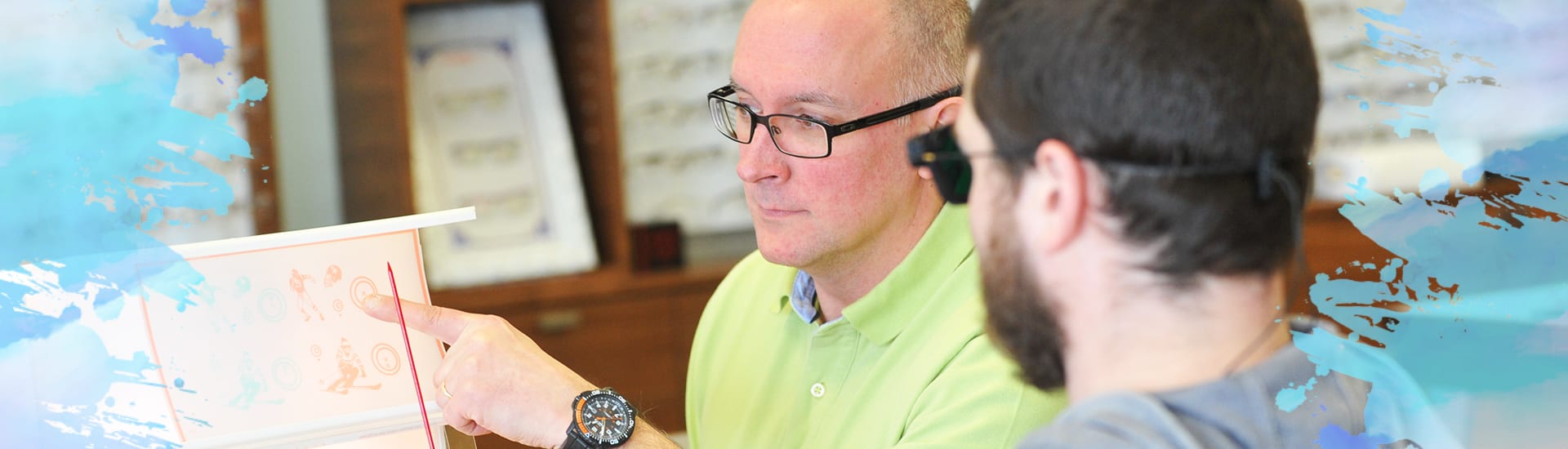
Vision therapy is like physical therapy for your eyes and brain. It uses targeted exercises and activities to strengthen the pathways between your brain and your visual system, teaching them to work together more effectively.
Through personalized training programs, vision therapy can help you develop stronger visual skills in several key areas:
- Eye teaming & coordination
- Focusing abilities
- Better eye movement control
- Visual processing skills
Vision therapy programs address underlying visual problems that standard eye exams or glasses may not correct.
Amblyopia (Lazy Eye) & Treatment Options
Amblyopia happens when one eye doesn’t develop normal vision, even with glasses or contacts. Your brain starts to favor the stronger eye and essentially “turns off” input from the weaker one. This creates more than just blurry vision in one eye—it also affects your depth perception and overall visual function.
Common Signs You Might Notice
You or your child might experience several symptoms that point to amblyopia:
- Blurry vision in one eye
- Poor depth perception
- Difficulty with reading tasks
- Head tilting when focusing
How Vision Therapy Helps Your Eyes Work Together
Rather than just patching the stronger eye, vision therapy trains both eyes to function as a team. This gradually teaches your brain to use input from both eyes, improving not just the vision in your weaker eye, but also your overall binocular vision skills.
Treatment for lazy eye can be effective at any age, though earlier intervention often yields faster results.
Strabismus (Eye Turn) & Alignment Issues
When your eyes don’t point in the same direction, you have strabismus. This misalignment can be constant or may only sometimes, and it affects much more than just appearance—it also disrupts your ability to see clearly and comfortably.
How Vision Therapy Addresses Strabismus
Vision therapy can help with various alignment problems:
- Eyes turning inward or outward
- One eye drifting up or down
- Intermittent alignment problems
Benefits Beyond Appearance
When vision therapy helps align your eyes properly, you gain improved binocular vision, reduced double vision, and better depth perception. These improvements make daily tasks like driving, reading, and sports activities much more comfortable and effective.
Understanding the differences between amblyopia and strabismus can help you recognize which condition might be affecting your vision.
Convergence Insufficiency & Near Vision Problems

Your eyes need to turn inward and work together when you look at something up close. If you have convergence insufficiency, this teamwork breaks down, making reading, computer work, and other near tasks uncomfortable or difficult.
Symptoms That Impact Daily Life
You might notice these problems during close-up work:
- Eye strain during reading
- Headaches after computer work
- Double or blurry vision up close
- Difficulty maintaining focus
Why Vision Therapy Works for This Condition
Vision therapy strengthens your eye muscles and retrains the coordination needed for comfortable near work. You’ll develop the stamina and control to keep your eyes properly aligned during reading, computer tasks, and other detailed activities.
Digital eye strain often worsens when underlying convergence problems aren’t addressed properly.
Learning-Related Vision Problems & School Performance
Your child might have 20/20 vision but still struggle with visual skills needed for learning. These problems affect reading fluency, writing ability, and overall academic performance, often leading to frustration and avoidance of schoolwork.
Signs Your Child Might Need Vision Therapy
Watch for these behaviors that suggest visual skill problems:
- Losing their place while reading
- Skipping words or lines
- Avoiding homework or reading tasks
- Poor handwriting despite putting in effort
Visual Skills That Support Learning
Vision therapy develops specific skills that your child needs for academic success:
- Eye tracking for smooth reading
- Focus flexibility for board to desk transitions
- Visual processing for comprehension
Vision therapy can significantly improve reading skills by addressing these underlying visual processing challenges.
Our team at Ottawa Vision Therapy works with each patient to determine the source of their difficulties, then we collaborate with them to correct and enhance their visual system.Whether you’re dealing with lingering concussion symptoms that affect your work performance or your child is struggling with vision issues that impact school success, vision therapy offers hope for improvement. Contact our team at Ottawa Vision Therapy today to learn how vision training can help you or your child achieve clearer, more comfortable vision.